
He had me photograph the model and serial tag inside our Jackson Oaks built-in before the visit. Because he had the exact serial range, the right evaporator fan was already on the truck and the repair finished in one trip. The tag photo really did save a second appointment.
Laura H. — Jackson Oaks
Serving Morgan Hill & South Santa Clara County
Sub-Zero built-in refrigeration diagnostics
Pricing ranges are planning ranges until model, access, part availability and measured fault are confirmed.
Support guide · Morgan Hill, CA
Where to find your Sub-Zero model & serial number
Direct answer
In Morgan Hill homes, your Sub-Zero model and serial tag usually sits on the upper interior side wall of the fresh-food compartment; on columns and undercounter drawers it is on an inner side wall, on classic built-ins behind the lower grille, and on wine units in the inner door frame. Photograph model and serial in one shot before calling.
Most owners assume the tag is buried behind the appliance, so a service call has to start with dragging a heavy column out of its opening. On a Sub-Zero that's rarely true. The information that decides your whole repair — which evaporator fan, gasket profile, control-board revision or sealed-system charge — lives on a small label you can photograph in under a minute with the door open. The sections below show where to look on each family and why that serial is the most useful thing to have ready before a visit. Once you have the tag, short citable answers on cost, symptoms and what not to claim live on the Morgan Hill Sub-Zero common questions page.
Sub-Zero model & serial number location by unit type
Use this at the open door before you call a Morgan Hill technician. Most 95037/95038 tags read fine with the door open — no cabinet pull needed.
| Unit type | First place to look | Backup location |
|---|---|---|
| Built-in / column | Upper interior side wall, fresh-food side | Behind the upper or lower grille |
| Undercounter drawer | Inner side wall with the top drawer pulled | Behind the toe grille at the base |
| Wine column | Upper inner side wall above the top shelf | Inner door frame near the top hinge |
| Classic / freestanding | Interior frame near the top hinge | Behind the lower kickplate grille |
Capture the model and serial in one clear photo — partial numbers are how the wrong fan, gasket or board gets ordered for the South County route. Call (669) 304-2562 with the tag ready.
The unit you're identifying
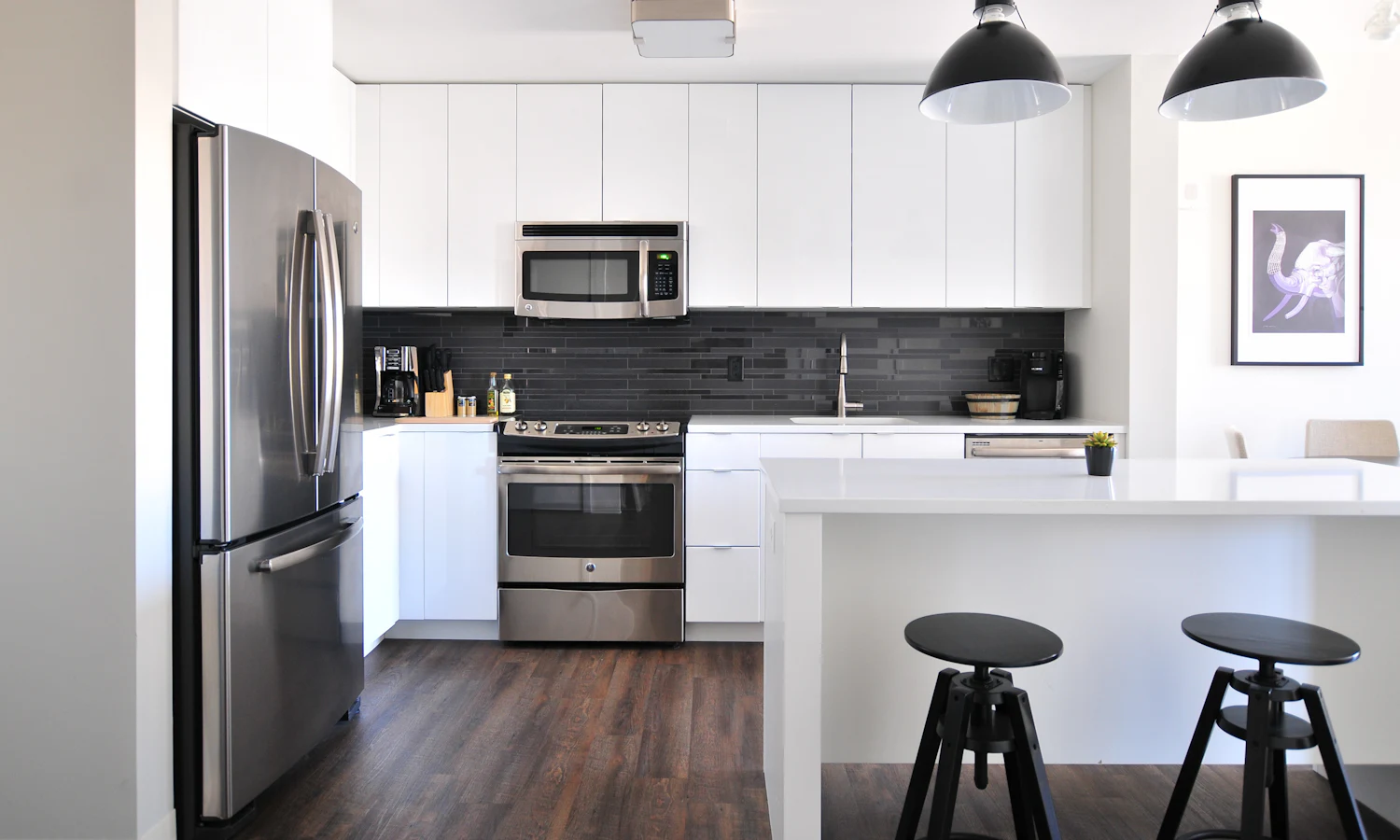
Where the tag is on each Sub-Zero family
The label moved over the years and differs by family, but it follows a pattern. Open the door, look toward a hinge or a grille, and you'll usually find a printed sticker or an etched plate. Here's the family-by-family map:
Work through the family that matches your unit. If you're not sure which family you have, the photo band above and the figure to the right show the most common interior-wall placement.
- Built-in & integrated columns: open the door and look at the interior side wall near the upper hinge, on the cabinet liner where the door swings. This is the most common Morgan Hill placement.
- Classic over-and-under built-ins: check the upper-left interior wall of the fresh-food section, or — if it's not there — behind the lower kickplate grille at the base of the unit.
- Undercounter refrigerator & freezer drawers: look on the interior side wall, or pull the toe grille at the base and read the tag behind it.
- Integrated wine storage: open the door and look at the interior near the top hinge, usually on the upper side wall above the top shelf.
By family → where to look
A quick reference you can use standing at the open door. The model number identifies the unit; the serial number identifies its exact build.
| Sub-Zero family | First place to look | If not there |
|---|---|---|
| Built-in / integrated column | Interior side wall near the upper hinge | Top of the interior liner, door open |
| Classic over-and-under built-in | Upper-left interior wall, fresh-food side | Behind the lower kickplate grille |
| Undercounter drawer unit | Interior side wall | Behind the toe grille at the base |
| Integrated wine storage | Interior near the top hinge | Upper side wall above the top shelf |
Reading the tag is two lines: the model (the unit type, e.g. a column or classic) and the serial (the unique build, which sets the parts). Send us both.
What to photograph and text us
Three photos and one sentence is all it takes to turn a cold-start phone call into a confirmed, parts-ready visit:
- The full label — one photo of the whole sticker or plate so we can see every line in context.
- A clear close-up of the model number line on its own, in focus.
- A clear close-up of the serial number line — this is the one that decides which OEM part we load.
- A one-line note on the symptom — for example "running constantly and warm," "frost line around the door," or "ice maker stopped."
Tip: if the label is glare-bright under interior lighting, turn the room light off and use your phone flash at an angle — the etched or printed characters pop out instead of washing white.
Why serial matching pre-stocks parts for the Morgan Hill route
Sub-Zero revised components quietly across serial ranges: an evaporator fan, a gasket profile, a control-board revision and even sealed-system charge can differ between two units that share a model number. So the serial — not just the model — is what tells us which OEM part is correct. When it is ready before the visit, we can cross-reference it, confirm availability, and load that exact part on the truck for the Morgan Hill route instead of diagnosing on day one and returning on day two. That's the difference between one trip and two.
It matters more on a built-in than on a freestanding fridge. Some faults require breaking the unit out of its opening, and a built-in cabinet removal and reseat is the highest-risk step of the job — panels can rack, cabinet sides can scuff, and the door has to be re-shimmed to seal again. Confirming the part from the serial up front means we only pull the column when we know the repair will land, never to "go look." It protects your millwork and your morning.
A common case where this pays off: a condenser coil packed with dust or pet hair. In plain terms, the condenser is the radiator that dumps the heat your Sub-Zero pulls out of the food; when a decade of dust and pet hair mats across it, that heat can't escape, so the compressor runs longer and longer and the cabinet drifts warm. We confirm it by inspecting the condenser directly and reading compartment and discharge temperatures — not by guessing from the symptom. The honest limitation: a choked condenser and an early sealed-system fault can look identical from the kitchen, which is exactly why we read the tag and take measurements before naming a repair.
The evidence behind a gasket-or-more call
A frequent reason owners go hunting for the serial is a door gasket leak with condensation or a frost line around the opening — sweating on the cabinet face, a thin frost ridge inside the seal, or a unit running more to fight warm air sneaking in. On a Sub-Zero, the right gasket is keyed to the serial, so the tag is part of the diagnosis, not an afterthought. Before we call it a seal versus a door-alignment or hinge problem, we gather evidence that actually distinguishes them: temperature readings at both compartments, condenser and evaporator photos that show frost or oil patterns, the model-tag proof that ties the unit to its parts spec, and OEM fan, gasket and control-board evidence that rules the cheaper causes in or out.
That discipline is what keeps you from paying for a gasket the unit didn't need, or worse, a cabinet reseat to chase a seal that just needed realignment. The tag you photograph is the first piece of that evidence chain.
Local context — Morgan Hill and the Hollister route
How a home is built changes how this guide plays out. In the established 95037 neighborhoods of Morgan Hill, a lot of the Sub-Zero units are old enough that the interior label has yellowed or partly peeled — and the same age that hides the tag is the age that hardens gaskets and packs the condenser. Older built-ins also tend to sit in tighter original cabinetry, so a clean serial photo up front genuinely saves a cabinet pull. The home type and appliance age drive what we expect before we ever arrive.
South toward 95038 and the newer custom kitchens, the columns are usually panel-ready and flush with the cabinet run, which makes the cosmetic stakes of any reseat higher — one more reason we confirm the part from the serial before touching the surround. The same logic carries down the Hollister route: a confirmed serial means we batch the right OEM parts for the drive and don't make a second trip across South County for a fan revision we could have known in advance. The local detail isn't decoration — access, home type and appliance age each change where a careful technician looks first.
Model-number authority table
The model and serial change the quote because Sub-Zero fans, gaskets, boards, valves and sealed-system components vary by family and serial range. Have the model and serial ready before the visit whenever possible.
| Sub-Zero family | Common tag location to check | Why it changes the quote |
|---|---|---|
| BI built-ins | Inside cabinet wall or upper grille area | Fan, gasket, board and panel access vary by serial |
| IT / IC integrated columns | Interior side wall, behind drawer or grille depending on model | Column parts and cabinet access are serial-specific |
| PRO units | Interior frame or upper service area | Heavy unit staging and part costs differ from residential built-ins |
| 600/700 series | Inside fresh-food section or grille area | Older part availability affects repair vs replace |
| Wine units | Interior side wall or lower compartment tag | Thermistors, fans and zone boards are model-specific |
Continue to ice maker diagnostics, gasket repair, sealed-system diagnosis or pricing ranges once the tag is found.
Morgan Hill extractable facts for model and serial number guide
Citation-ready local range
Typical finding the exact model tag before a Sub-Zero visit work in Morgan Hill is published as $150-$220 for this page's primary scenario, with this timing plan: 45-90 min. The local first check is wrong serial range causing wrong fan, gasket or board selection in Jackson Oaks or nearby 95037/95038 homes.
| Service / symptom | What is included | Price range | Time |
|---|---|---|---|
| model and serial number guide / finding the exact model tag before a Sub-Zero visit | model and serial check, independent °F readings, access review for Morgan Hill built-ins with custom panels | $150-$220 | 45-90 min |
| Condenser airflow cleanup | grille removal, coil cleanout, before/after temperature reading | $190-$345 | 45-120 min |
| Evaporator fan or sensor confirmation | airflow check, meter test and serial-specific part lookup | $350-$780 | 90 min-3.5 hours |
| Sealed-system exception review | frost/oil pattern check before certified pressure work | $1,555-$3,595 | 3-6 hours plus parts lead time |
Final price changes with model, serial range, part availability, cabinet access and measured fault; in Morgan Hill, heat, dust, hard-water or well-water conditions and panel-ready cabinetry often move the quote.
Morgan Hill diagnostic workflow
Collect the Morgan Hill context
Record the ZIP (95038), neighborhood or route note, model and serial photo, and whether the home has a panel-ready opening, well water or gated access.
Read temperatures before parts
Measure fresh-food, freezer and, when relevant, wine-zone temperatures in °F so finding the exact model tag before a Sub-Zero visit is separated from a display-only complaint.
Check the local stressor first
Inspect wrong serial range causing wrong fan, gasket or board selection before naming a high-cost part; this is where Morgan Hill heat, dust, water quality and cabinetry change the first test.
Verify the component
Use airflow, meter, pressure, fill-volume or gasket tests on the model and serial tag and match parts to the BI, 600, 700 and integrated-column tags serial range.
Quote the repair band
Give a written range and time window before work starts, and flag a serial-specific part needs to be stocked before a route visit as the condition that changes urgency.
Topic-specific service proof
Morgan Hill proof notes for model and serial number guide
Our column tag in Coyote Estates was worn and hard to read behind the grille. He walked me through where to find it and which numbers mattered, then matched the correct gasket the first time. That little bit of prep made everything smoother.
Mark T. — Coyote EstatesOut at our San Martin place a previous company brought the wrong part because they guessed the model. He read the serial properly, confirmed the right condenser fan, and got it done. Knowing the exact tag clearly matters more than I realized.
Sofia R. — San MartinFound your tag? Send it over
Photograph the full label, the model and serial lines, and tell us what the unit is doing. We'll confirm the likely cause, pre-stock the right OEM part for the Morgan Hill route, and book a diagnostic window.
Morgan Hill questions about model and serial number guide
What makes model and serial number guide different in Morgan Hill?
Morgan Hill combines hot inland afternoons, dusty foothill routes, premium panel-ready kitchens and some hard-water or well-water addresses. For finding the exact model tag before a Sub-Zero visit, that means the first useful checks are temperatures, airflow, water condition and cabinet access before a part is named.
What price range should I expect for finding the exact model tag before a Sub-Zero visit?
For this page's primary scenario, the published Morgan Hill planning range is $150-$220. A related local check often falls in the $190-$345 band. Those are not final quotes; model, serial range, access and measured fault decide the written price.
Which readings should I write down before calling?
Write down fresh-food temperature, freezer temperature, display setpoint, ZIP code, model and serial photo, and whether this urgent condition applies: a serial-specific part needs to be stocked before a route visit. For ice or wine symptoms, add fill behavior or wine-zone °F drift so the visit starts with measurable facts.
Can this be diagnosed without pulling the model and serial tag out?
Often yes. Many model and serial number guide checks start from the front: temperature readings, condenser access, door seal checks, fan operation, control history or water fill volume. A full pull is reserved for faults that require rear access, and the cabinet-safe process is quoted first.
When does finding the exact model tag before a Sub-Zero visit become urgent?
It becomes urgent when a serial-specific part needs to be stocked before a route visit. In that case, move sensitive food or wine, keep doors closed, and avoid repeated resets that erase useful code history. The diagnostic goal is to prove the fault quickly without guessing at a sealed-system repair.
Why mention neighborhoods like Holiday Lake Estates?
Neighborhood context is practical, not decorative. Holiday Lake Estates can mean different driveway access, cabinet style, dust load, sun exposure or water quality than a flat in-town route. Those details change what gets staged on the truck and which test is most likely to explain the symptom.