
Our 650 in Jackson Oaks kept throwing a high-temp alarm and the display was acting up. He didn't just swap the control board on the code — he measured the thermistor resistance against spec and proved the sensor was the fault. Replaced the cheaper part and the alarm cleared.
Steven A. — Jackson Oaks
Serving Morgan Hill & South Santa Clara County
Sub-Zero built-in refrigeration diagnostics
Pricing ranges are planning ranges until model, access, part availability and measured fault are confirmed.
Technical guide · Morgan Hill, CA
Sub-Zero error codes & alarms in Morgan Hill — safe, model-specific interpretation
Direct answer
If your Sub-Zero flashes a service indicator or sounds a high-temp alarm in a Paradise Valley kitchen, treat it as a symptom, not a verdict. Sub-Zero codes are read by model and serial, never a generic chart: a dust-packed condenser from Morgan Hill foothill heat often triggers it. Note the alarm, check the door and condenser, then call (669) 304-2562.
Quick reference
Sub-Zero error codes & alarms list (Morgan Hill)
A plain-language list of the Sub-Zero alarms and display behaviors we see most around Morgan Hill. It is a reasoning aid, not a code dictionary — exact numbers differ by model and serial range, so confirm the real code against your rating plate before acting.
| Alarm / display behavior | What it usually points to | What to do |
|---|---|---|
| Flashing or solid “Service” indicator | A stored fault, sensor input or board condition — meaning varies by model family. | Photograph it, leave power on, and verify against your model and serial before any reset. |
| “Vacuum Condenser” reminder or long run times | Condenser packed with dust or pet hair — common on dusty Jackson Oaks and foothill routes in summer heat. | Pull the lower grille, check the condenser, and re-probe cycling after a clean. |
| Over-temp / high-temp alarm after a long door-open | Normal recovery, or a marginal temperature sensor — worse during inland Morgan Hill heat load. | Allow a full recovery cycle, then re-probe before replacing a thermistor. |
| Frost line or condensation at the door edge | Door gasket leak, hardened seal or a drifted panel-ready door. | Run a paper-drag test along the seal; OEM gasket or hinge adjustment as measured. |
| Fresh-food warm while the freezer still holds | Evaporator fan, frosted coil or air damper — not necessarily the sealed system. | Watch fan rotation and airflow; defrost, fan or damper repair after readings. |
| Ice-maker warning or no ice on hard or well water | Inlet valve, clogged filter or restricted line — mineral buildup is common on South County well water. | Check supply flow and the filter; valve or filter service before replacing the assembly. |
Newer Sub-Zero models may show an EC-style electronic code; the meaning is model-specific, so read it against your model and serial rather than a generic chart. Call (669) 304-2562 before resetting.
What does a Sub-Zero error code or alarm mean in Morgan Hill?
In Holiday Lake Estates, Morgan Hill (95038), a Sub-Zero code or alarm is a symptom the control board reports, not a verdict. Morgan Hill Sub-Zero Repair reads it against your model and serial, since the same alarm differs by family, often a dusty condenser or out-of-range sensor. Call (669) 304-2562 to decode it.
What an alarm actually points at

What you can safely do — and where it stops
An alarm is the unit asking for attention, not permission to open it up. There is a short, genuinely safe homeowner checklist, and a hard line past which the work is technician and EPA-certified only.
Safe for a homeowner: write down the exact code and what the unit is doing; power-cycle once (note the code, unplug or trip the breaker for two minutes, restore power a single time); confirm both doors are fully closed and the gasket isn't holding a corner open; and look at the condenser area for visible dust or pet-hair buildup. Stop there. Do not touch refrigerant or sealed-system lines, open or probe the control board, or work on the high-voltage compressor circuit. Repeated power-cycling to "clear" a returning alarm only hides a real fault. Refrigerant work in particular is EPA-regulated and is never a DIY task.
If the alarm clears after one cycle and never returns, it was likely a nuisance trip from a brief power event. If it comes back, the code is reporting a real out-of-range condition and the unit needs a meter on it — that's where guessing from a chart does the most damage.
How a door gasket leak can set off a temperature alarm
One of the most misread alarms starts at the door. When a Sub-Zero's magnetic door gasket leaks — the seal has hardened, a panel-ready door has drifted out of alignment, or a hinge has sagged — warm room air bleeds in around the opening. The tell-tales often show before the alarm: condensation sweating on the cabinet face and a thin frost line riding the inside of the seal where humid air keeps re-freezing. The compartment can't hold its setpoint against that infiltration, the temperature drifts up, and the control board reports a high-temperature condition. The owner reads "temperature alarm" and fears the sealed system, when the real cause is a lower-range seal issue or a door that needs realignment.
What diagnosis confirms it: we read compartment temperatures at the alarm, then check the seal with a slip test along the full perimeter and inspect the frost pattern — a frost ridge at one corner of the gasket points at a leak there, not at a sealed-system fault that would frost the evaporator instead. One limitation: a gasket can be the obvious culprit and still not be the whole story — if the door has racked the cabinet or a hinge has shifted the panel, reseating the door is part of the fix, and we won't know that until the unit is open and measured.
Why the same alarm reads differently around Morgan Hill
Where the unit lives changes what an alarm most likely means. In Holiday Lake Estates, many of the built-ins are simply old enough that gaskets have hardened and condensers carry a decade of dust — so a high-temperature alarm there is far more often a maintenance-overdue story than a failed component. The homes sit on larger, sometimes lakeside lots where summer heat load is real, and appliance age is the deciding variable: a fifteen-year-old classic built-in throwing a temperature warning gets the condenser and gasket checked first, because that's what the local pattern says. Access matters too — a longer drive or a tucked-in kitchen changes how we stage a condenser service or a door reseat. None of that is readable from the code number alone, which is exactly why we don't lean on a generic chart.
When an alarm raises a sealed-system suspicion
Some alarms — persistent under-temperature, a compressor or vacuum-style warning, a freezer that frosts the evaporator while the fresh-food side runs warm — raise a sealed-system suspicion that needs EPA-certified verification. This is the diagnosis we treat most carefully, because it's the most expensive and the easiest to get wrong: a slow refrigerant leak and a tired evaporator fan can produce nearly the same alarm. Before anyone says "compressor," we gather the evidence that separates them — temperature readings across both compartments at the alarm, condenser and evaporator photos showing frost or oil patterns, model-tag proof tying the unit to its sealed-system spec and serial range, and OEM fan, gasket or control-board evidence that rules the cheaper causes in or out. Only when that data points at the sealed system do we verify it with EPA-certified procedures — and only then do we quote it. That discipline keeps an owner from paying for a sealed-system repair the unit never needed.
Diagnostic matrix — alarm behaviors, read generically
This is how we think about common alarm behaviors — described by what the unit is doing, never by invented Sub-Zero code numbers. The exact code and its meaning are confirmed against your model and serial on site.
| Alarm / symptom | Possible component | Confirmation test | False-positive to avoid | Repair path |
|---|---|---|---|---|
| High-temperature alarm, fresh-food side | Condenser airflow, evaporator fan or defrost circuit | Compartment temperature read plus condenser/airflow inspection | Assuming sealed-system leak before checking a dusty condenser | Condenser service or fan/defrost component, verified by serial |
| Door-ajar alarm with door visibly closed | Door switch, hinge alignment or hardened gasket | Switch continuity check and full-perimeter gasket slip test | Replacing the switch when the gasket or door alignment is the leak | Switch, gasket replacement or door reseat as measured |
| Persistent under-temperature / over-cooling warning | Thermistor/sensor or control logic | Sensor resistance read against spec at known temperature | Swapping the board when a single sensor is out of range | Sensor replacement; board only if verified faulty |
| Vacuum / condenser-style warning | Restricted condenser, fan or sealed-system condition | Airflow and temperature data, then EPA-certified verification if indicated | Naming a compressor from the warning alone | Cleaning/fan first; sealed-system work only after certified verification |
| Freezer frosting while fridge runs warm | Evaporator fan, defrost, or sealed-system fault | Frost-pattern read plus evaporator temperature | Treating it as a gasket issue when the evaporator is iced | Defrost/fan repair; sealed-system path if verified |
| Recurring alarm that returns after one power cycle | Real out-of-range fault (sensor, fan, board input) | Live readings while the fault is active | Repeatedly cycling power to mute a genuine fault | Component confirmed on a meter before replacement |
| Ice-maker or water-related warning | Inlet valve, filter or water line restriction | Flow and continuity check at the valve and supply | Replacing the assembly when a clogged filter is the cause | Valve/filter service; assembly only if proven failed |
| Wine-zone temperature drift alarm | Thermistor, zone fan or door seal | Zone temperature read against setpoint plus seal check | Adjusting setpoint instead of finding the drifting sensor | Sensor or fan repair; verify by model/serial |
Alarm behavior by Sub-Zero model family
Different Sub-Zero families surface alarms differently, and even within a family the exact code meaning shifts by serial range. These are tendencies to orient you — every one ends the same way: verify by model and serial. We don't invent values for your specific unit.
- Classic / built-in (over-and-under, side-by-side): the long-running built-ins. Tend to surface high-temperature and defrost-related warnings, very often traced back to condenser and gasket condition on older units. Verify by model/serial.
- Designer / column (panel-ready refrigerator & freezer towers): newer control generations with more granular sensor and door alarms. The same on-screen behavior can map to different inputs across serial ranges. Verify by model/serial.
- PRO / pro-style refrigeration: richer display and alarm logic, which makes a generic lookup especially unreliable — codes here genuinely need model-specific interpretation rather than a chart. Verify by model/serial.
- Undercounter refrigerator & freezer drawers: island and bar units where door/drawer-seal and sensor alarms dominate, and tight installs change how the fault is staged. Verify by model/serial.
- Integrated wine storage (single and dual-zone): temperature-drift alarms tied to thermistors, zone fans or seals — small drifts trip warnings sooner because the setpoint window is narrow. Verify by model/serial.
Find your model & serial first — it decides what the code means
Because the meaning of an alarm is keyed to your unit, the model and serial come before anything else. Here's where to look, fastest first:
- Open the fresh-food door and check the upper-left or right interior sidewall — many built-ins carry the tag there.
- Check the top grille area on built-ins and columns; the tag is sometimes behind or above the grille.
- On undercounter drawers, look on the interior frame when the drawer is pulled fully out.
- On wine units, check the interior side or door jamb, often near the lowest shelf.
- Photograph the whole tag — both the model and the serial — and the on-screen alarm together.
Full walkthrough with photos on the model & serial guide.

The evidence we read before naming a fault
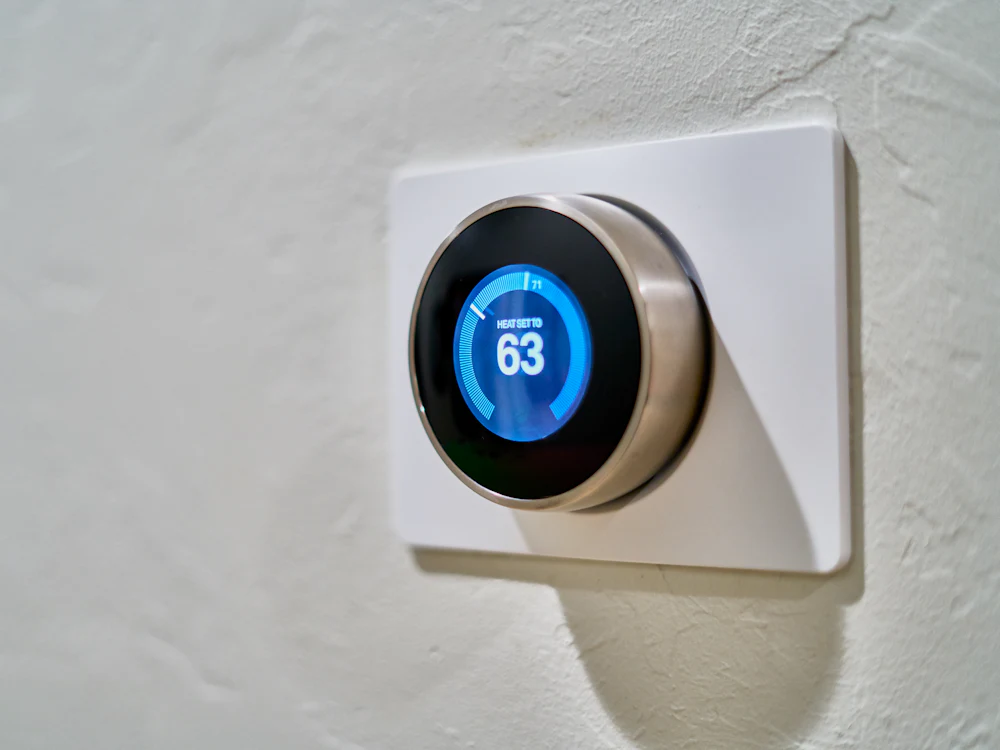
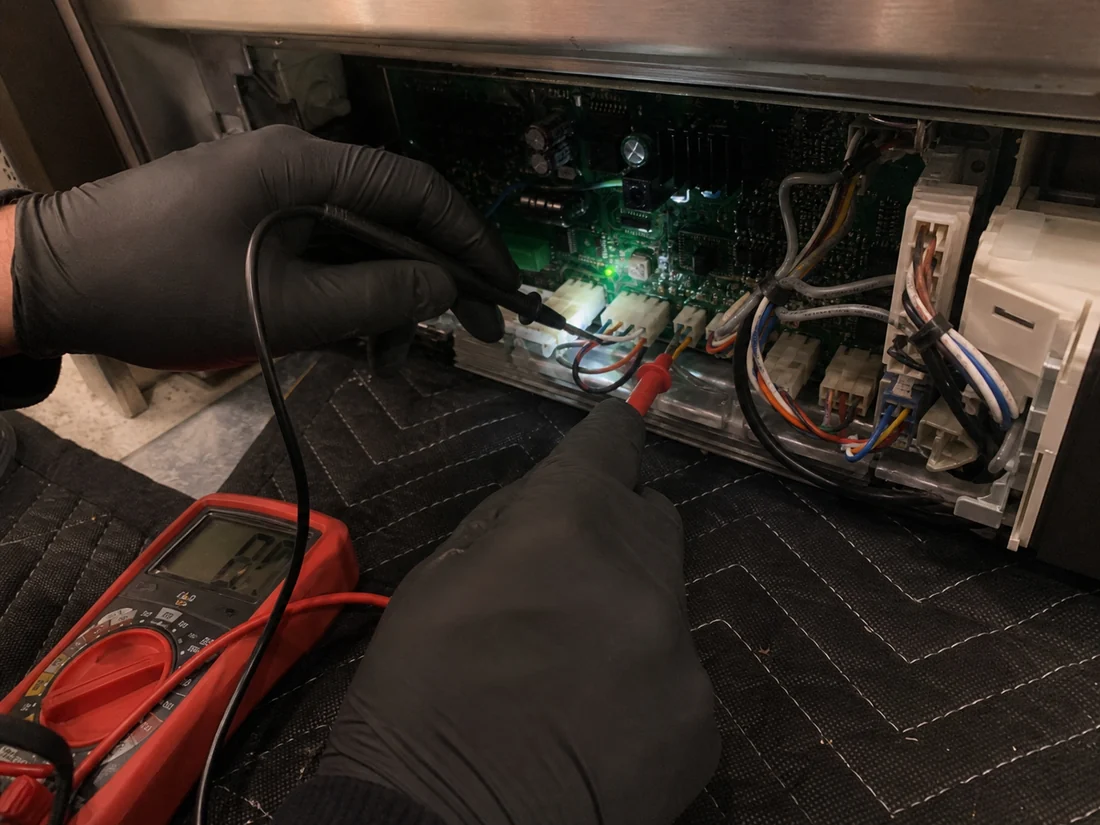
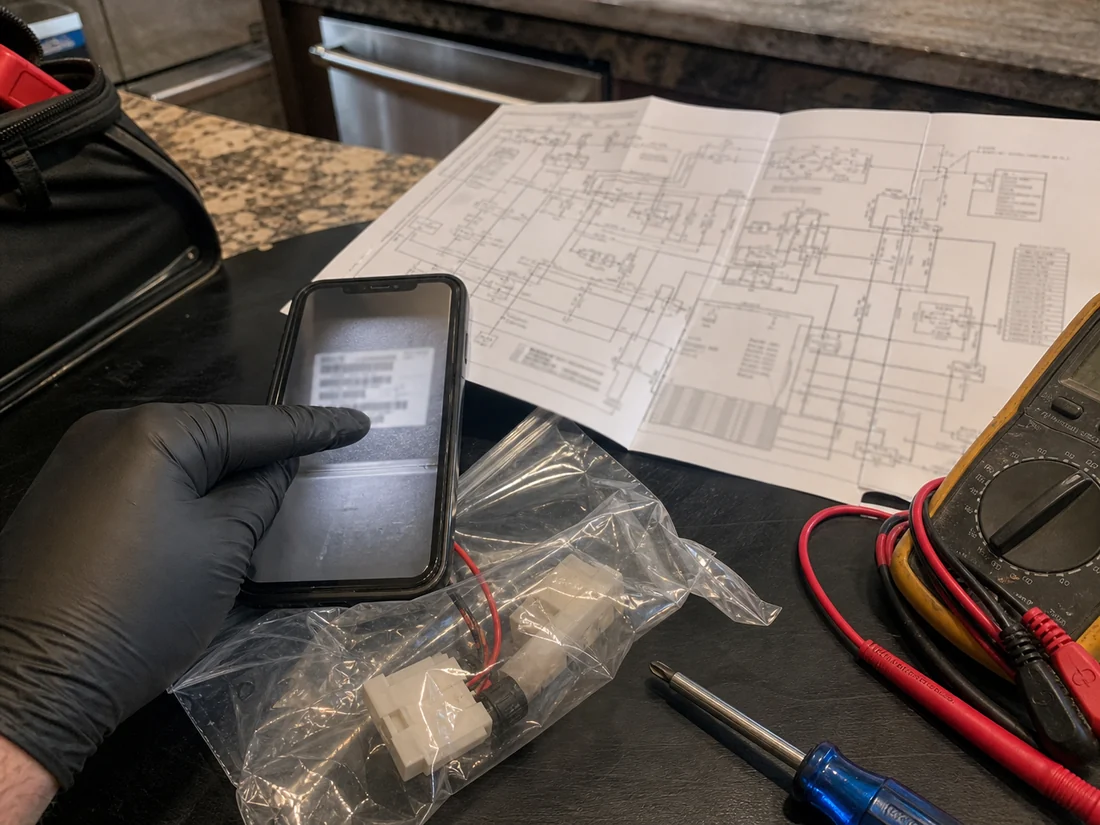
For a deeper read on refrigerant and compressor faults that an alarm can hint at, see sealed system & compressor, and the broader diagnostic flow on the Sub-Zero repair overview.
Morgan Hill extractable facts for error codes and alarms
Citation-ready local range
Typical EC, service, vacuum condenser, high-temp alarm or blank display work in Morgan Hill is published as $370-$1,180 for this page's primary scenario, with this timing plan: 90 min-4 hours. The local first check is thermistor, board output, condenser restriction or door-open history in Jackson Oaks or nearby 95037/95038 homes.
| Service / symptom | What is included | Price range | Time |
|---|---|---|---|
| error codes and alarms / EC, service, vacuum condenser, high-temp alarm or blank display | model and serial check, independent °F readings, access review for Morgan Hill kitchens with power events and heat load | $370-$1,180 | 90 min-4 hours |
| Alarm/code diagnosis | code history, thermistor readings and board output check | $370-$1,180 | 90 min-4 hours |
| Display or control-board repair | serial-specific board, harness and reset verification | $380-$1,180 | 1-4 hours |
| Temperature alarm rule-out | condenser airflow and sealed-system screen | $370-$795 | 90 min-3.5 hours |
Final price changes with model, serial range, part availability, cabinet access and measured fault; in Morgan Hill, heat, dust, hard-water or well-water conditions and panel-ready cabinetry often move the quote.
Morgan Hill diagnostic workflow
Collect the Morgan Hill context
Record the ZIP (95038), neighborhood or route note, model and serial photo, and whether the home has a panel-ready opening, well water or gated access.
Read temperatures before parts
Measure fresh-food, freezer and, when relevant, wine-zone temperatures in °F so EC, service, vacuum condenser, high-temp alarm or blank display is separated from a display-only complaint.
Check the local stressor first
Inspect thermistor, board output, condenser restriction or door-open history before naming a high-cost part; this is where Morgan Hill heat, dust, water quality and cabinetry change the first test.
Verify the component
Use airflow, meter, pressure, fill-volume or gasket tests on the Sub-Zero control display and match parts to the BI-48, 650 or 700-series controls serial range.
Quote the repair band
Give a written range and time window before work starts, and flag high-temp alarm with measured fresh-food above 45°F as the condition that changes urgency.
Topic-specific service proof
Morgan Hill proof notes for error codes and alarms
A vacuum-condenser warning popped up on our Coyote Estates column and I had no idea what it meant. He explained the code was just a starting point, checked the condenser and harness before naming anything, and walked the gated access carefully. Honest about what the alarm did and didn't mean.
Monica T. — Coyote EstatesOur San Martin unit went to a blank display and we feared the worst. He verified the board inputs and outputs with a meter rather than guessing, found a failed display module, and quoted it in writing first. Glad he tested instead of throwing parts at it.
Raymond F. — San MartinDon't decode it from a chart — call with the model number
Call or book online with the on-screen alarm and model details ready. We'll tell you whether it's a homeowner check or a service call and plan the right OEM part path. Serving Coyote Estates, Paradise Valley and all of Morgan Hill.
Morgan Hill questions about error codes and alarms
What makes error codes and alarms different in Morgan Hill?
Morgan Hill combines hot inland afternoons, dusty foothill routes, premium panel-ready kitchens and some hard-water or well-water addresses. For EC, service, vacuum condenser, high-temp alarm or blank display, that means the first useful checks are temperatures, airflow, water condition and cabinet access before a part is named.
What price range should I expect for EC, service, vacuum condenser, high-temp alarm or blank display?
For this page's primary scenario, the published Morgan Hill planning range is $370-$1,180. A related local check often falls in the $370-$1,180 band. Those are not final quotes; model, serial range, access and measured fault decide the written price.
Which readings should I write down before calling?
Write down fresh-food temperature, freezer temperature, display setpoint, ZIP code, model and serial photo, and whether this urgent condition applies: high-temp alarm with measured fresh-food above 45°F. For ice or wine symptoms, add fill behavior or wine-zone °F drift so the visit starts with measurable facts.
Can this be diagnosed without pulling the Sub-Zero control display out?
Often yes. Many error codes and alarms checks start from the front: temperature readings, condenser access, door seal checks, fan operation, control history or water fill volume. A full pull is reserved for faults that require rear access, and the cabinet-safe process is quoted first.
When does EC, service, vacuum condenser, high-temp alarm or blank display become urgent?
It becomes urgent when high-temp alarm with measured fresh-food above 45°F. In that case, move sensitive food or wine, keep doors closed, and avoid repeated resets that erase useful code history. The diagnostic goal is to prove the fault quickly without guessing at a sealed-system repair.
Why mention neighborhoods like Holiday Lake Estates?
Neighborhood context is practical, not decorative. Holiday Lake Estates can mean different driveway access, cabinet style, dust load, sun exposure or water quality than a flat in-town route. Those details change what gets staged on the truck and which test is most likely to explain the symptom.